

Deep insights. Simply put
Carefully curated. Deeply researched. Free of ads and shackles.
There are brilliant content producers with the finger on the pulse. So we won’t regurgitate the news just to keep up with the crowd, except if the news needs an urgent second opinion. And this is not a rarity. We take our time to see through commercial biases, and noodle on the nuances behind the headlines. Always in an easily digestible form. An individual human may be pear-shaped but is never bell-shaped - meaning, statistical evidence for whole populations may not fit well with you if you’re an edge case or working in extremes. Like many of our patients. While on the programme or alumni membership we’ll take the topics you ask us about and tailor what it means to those like you. And while we use AI tools to help us search and type faster, rest assured, we don’t rely on anyone except the experts.
-
We geek out on:-
Preventive & therapeutic medicine
Leadership & relationships
Health-span research
Human Performance Science
Nutrition and 'Notrition' (fasting) and Nootrition (cognitive enhancement)
Sleep, Jetlag and circadian biology
Fitness & Physique
All things Psyche...
-
,,,,
-
…
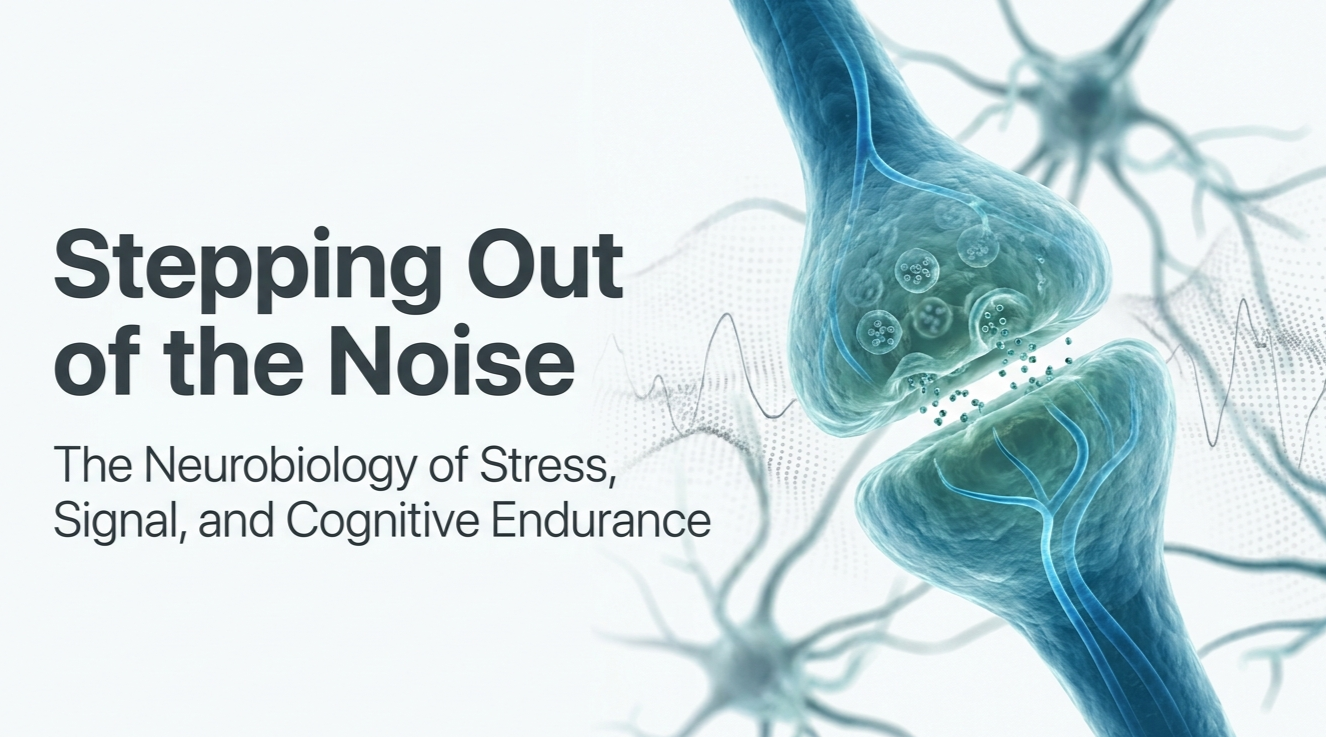
Stepping Out of the Noise:
The Pause is Part of the Work
A founder replies to a board email at 11pm, three minutes after it hits her inbox. Her message is fluent and quick, but slightly off. Twelve hours later, in the shower, a better answer arrives. But by then the email thread has moved on.
This is the new environment many Founders and leaders now find themselves in. Inputs arrive during the working day, and beyond, faster than they can be "metabolised". AI has now compressed that window even further, not because the technology itself forces you to respond but because everyone else's response time has rapidly accelerated. On the surface, this might look like productivity but the real cost is actually measured in quality of judgement or the delegation of that judgement.
The more interesting question is not do we do less. The question is what is actually being traded under that pressure, and what would it take to think more clearly?
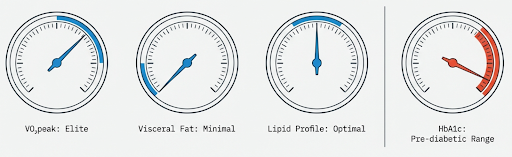
High performance and high HbA1c: fitness does not guarantee protection from poor sleep
Here’s a conundrum.
You are fit, with high VO2peak, low visceral fat, and reassuring lipids.
Yet HbA1c sits high normal, or drifts into the prediabetic range.
The default explanation is insulin resistance.
In some lean, high performing people, that explanation does not tally with the rest of the data.
I think this is one of the more interesting mismatches I see in my practice. You can have obvious signs of good “peripheral” metabolic health and still see suboptimal blood sugar levels.. The current evidence suggests that sleep, stress, and insulin secretion may explain part of that gap, although the phenotype is not yet defined as a formal syndrome in the literature.