

Deep insights. Simply put
Carefully curated. Deeply researched. Free of ads and shackles.
There are brilliant content producers with the finger on the pulse. So we won’t regurgitate the news just to keep up with the crowd, except if the news needs an urgent second opinion. And this is not a rarity. We take our time to see through commercial biases, and noodle on the nuances behind the headlines. Always in an easily digestible form. An individual human may be pear-shaped but is never bell-shaped - meaning, statistical evidence for whole populations may not fit well with you if you’re an edge case or working in extremes. Like many of our patients. While on the programme or alumni membership we’ll take the topics you ask us about and tailor what it means to those like you. And while we use AI tools to help us search and type faster, rest assured, we don’t rely on anyone except the experts.
-
We geek out on:-
Preventive & therapeutic medicine
Leadership & relationships
Health-span research
Human Performance Science
Nutrition and 'Notrition' (fasting) and Nootrition (cognitive enhancement)
Sleep, Jetlag and circadian biology
Fitness & Physique
All things Psyche...
-
,,,,
-
…
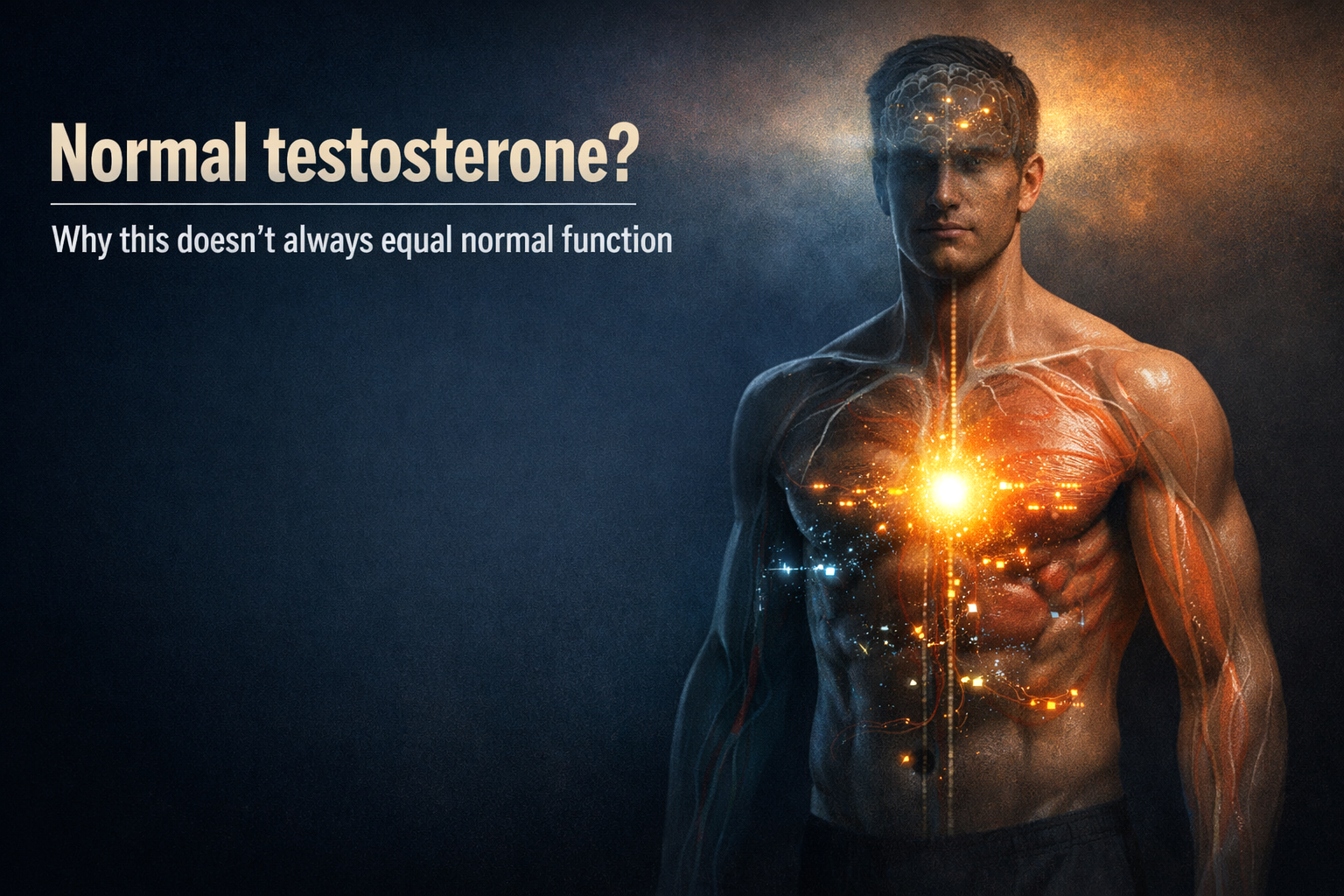
Why “normal” testosterone does not always mean normal function
Why is it that testosterone looks normal but you still have symptoms consistent with low testosterone?
Low libido.
Reduced energy.
Blunted drive.
It is tempting to conclude: Testosterone is not the problem.
That is a conclusion too easy to arrive at.
This is one of the mismatches we often see in clinic, and it is not peculiar to testosterone.
Someone can be within the lab’s normal reference range, sometimes comfortably inside it, and still describe symptoms that are discordant with what the results are saying.
The evidence does not support diagnosing testosterone deficiency from symptoms alone. But it also does not support asserting that a normal total testosterone is the end of the conversation either.
Current guidelines require symptoms plus unequivocally low testosterone for diagnosis, while the physiology tells us that total testosterone is only one part of a wider system.
Furthermore, there is no consensus amongst specialist bodies as to what the lower threshold of total testosterone or free testosterone below which individuals will notice symptomatic improvements.
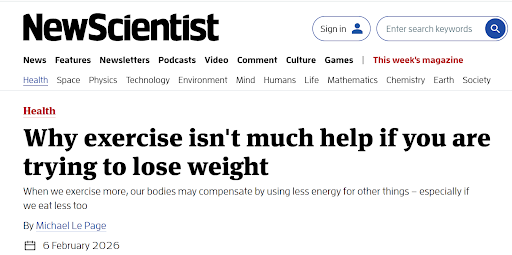
Can we believe the headlines: Why exercise isn’t much help if you are trying to lose weight
I was sent this eye-catching headline from a magazine this month. Many people struggle to lose weight and cycle through different diets, exercise routines, fads and more in an effort, amongst many other drivers, to improve their health. Is this headline true, and if not, what harm can it do when attempting to catch a reader’s attention?

Kicking-ass into your 90s…optimising for future muscle function
Optimal muscle function is one of the most critical components of enabling individuals to be “kicking-ass into their 9th decade”, as my friend and colleague Dr Jack Kreindler would say. By midlife, we start to lose muscle mass (around 3–5% per decade after age 30 on average), but the good news is that proper exercise and nutrition can significantly slow or even reverse this trend.

How to put on muscle: Why less might be more.
Blood flow restriction (BFR) training is a relatively new training method, but it has quickly gained popularity among athletes and fitness enthusiasts alike. This is because BFR has been shown to be very effective at increasing muscle strength and size, even when using light weights.