
Can You Train Your Brain to Boost Vaccine Response?
When mind meets immunity: why this matters
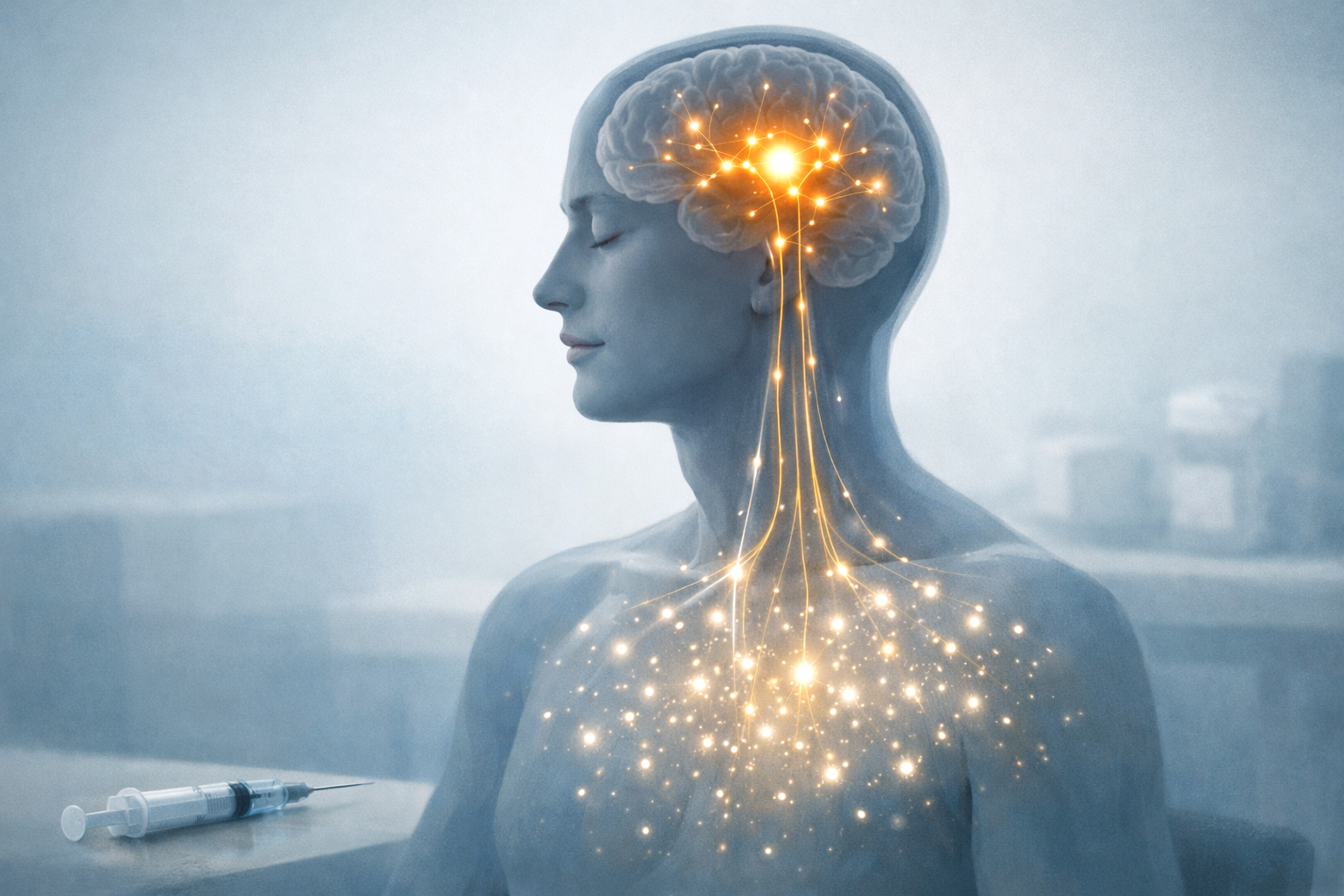
Missing a competition or event because of flu, feeling run down or watching your metrics dip after a jab, is a frustration many of us know well. We often treat the immune system as something we cannot consciously train, but recent studies hint that the way we think and feel could influence vaccine responses [1]. Imagine harnessing your mind to prime your body before the next vaccination. Yet the evidence is still young and nuanced. Before you start conjuring positivity at will, let’s unpack what one of the first human trials and the wider literature really show.
What did the new trial demonstrate?
Researchers in Israel and the USA ran a double‑blind randomised controlled trial to see if consciously up‑regulating activity in the brain’s reward system could boost antibody responses to a vaccine.
Eighty‑five healthy adults aged 18-45
Allocated to one of three conditions:
a functional MRI‑based neurofeedback intervention targeting the ventral tegmental area and nucleus accumbens (the key hubs of the reward network)
an active neurofeedback control targeting unrelated brain networks
a no‑training control
Participants used self‑selected mental strategies (recalling a trip, imagining success, etc.) while viewing real‑time feedback of their brain activity. Immediately after the final training session, everyone received a hepatitis B vaccine; antibody levels were measured before vaccination and at 14 and 28 days afterwards. A subset returned three months later for a follow‑up.
Brain reward network outcomes
Both neurofeedback groups got better at increasing activity in the ventral tegmental area over the duration of the sessions. This improvement was not unique to the group trained on the reward network, and there was no meaningful difference between the reward-targeted and control-targeted groups.
Immune outcomes
The main immune outcome was the change in hepatitis B antibody levels after vaccination. When the researchers looked across the two neurofeedback groups, people who were better at increasing activity in the ventral tegmental area tended to show a bigger rise in antibodies. The link was modest and statistically significant, and it also appeared to hold in the smaller subgroup measured again three months later. However, across the group neurofeedback of either type didn’t seem to have a greater effect than having no neurofeedback.
Limitations and conflicts
There are a number of limitations. Firstly, as the authors emphasise, this was just a mechanistic pilot, not a full clinical efficacy trial. They did not include a direct placebo, nor were factors such as sleep, circadian rhythms and autonomic function measured, which can all influence vaccine responses. It was also only a small sample size. Whilst not invalidating the trial, some of the authors have filed a patent related to neurofeedback‑induced immune modulation and have ties to a neurotechnology company.
How does this fit with the wider evidence?
Mindsets and expectations
This study hints that positive expectations might impact our immune response. A separate 2024 prospective study explored whether people’s beliefs about vaccines predicted their antibody responses to COVID‑19 vaccination [2]. Among more than 450 adults, people who believed that side‑effects are a sign that the vaccine is working had higher antibodies six months later. Positive vaccine mindsets were robustly associated with fewer side‑effects, less stress and greater happiness after vaccination. These results do not demonstrate causality but suggest that expectation framing could improve the subjective experience and, in some cases, might influence immune dynamics.
Behavioural interventions
Physical activity is one of the more consistent behavioural predictors of vaccine responses. A 2022 review combining data from several flu vaccine studies (550 people in total) found that people who were more physically active before vaccination were more likely to mount a “successful” antibody response to one strain of flu (H1) [3]. In practical terms, their chances of showing that response were about two thirds higher than less active people.
In the studies where people did a short bout of exercise around the time of vaccination, those who were more active in day to day life also tended to produce higher antibody levels afterwards. The size of the effect was modest, roughly a 20% higher chance of a stronger antibody response, and the true effect was likely somewhere between about 3% and 39% higher based on the data.
Sleep also looks like a useful lever. A 2023 meta analysis found that short sleep (under 6 hours per night) around the time of vaccination was associated with a substantially lower antibody response [4]. In a controlled study of 27 men, sleeping the night after hepatitis A vaccination improved measures of longer term immune memory compared with staying awake [5].
Psychology can influence physiology beyond immunity. In a randomised genetic feedback experiment, participants were genotyped but then randomly told they had either a high risk or protective result for exercise capacity before completing a treadmill test [6]. That information alone changed cardiorespiratory measures, perceived exertion, and running endurance in the expected direction, and these effects did not meaningfully change according to participants’ actual genotype.
What does this change in practice?
For now, not much. The mesolimbic neurofeedback study shows a correlation between activating the reward system, but it does not prove that training this brain region will make you more resistant to infection. There are several take‑away:
Stick to the known foundations. Adequate sleep, recovery, balanced nutrition and tailored training programmes remain the most reliable ways to support immune function. The small trial above does not replace those foundations.
Harness expectations wisely. While you cannot think your way to immunity, cultivating realistic positive expectations might make the vaccination experience possibly more positive. In the trial, positive expectation strategies became more effective at sustaining VTA activity. The 2024 mindset study found that people who believed side‑effects signified efficacy had better antibody responses.
Invest in physical activity. Evidence from multiple trials shows that regular moderate‑to‑vigorous physical activity and acute exercise sessions before vaccination can meaningfully enhance influenza vaccine responses.
Frequently asked questions
Does this study prove that positive thinking boosts my immune system?
No. The trial showed a correlation between activation of reward centres in the brain and antibody change. It did not demonstrate that inducing positive thoughts causes a stronger immune response. Causality remains unproven.
How large was the antibody effect?
Across all participants in the neurofeedback arms, each unit increase in VTA regulation (a slope measure of brain activity change) corresponded to a modest rise in antibody titres (r=0.31). There were no significant differences between the trained and control groups.
Is fMRI neurofeedback safe?
In this trial, no adverse effects were reported. However, fMRI neurofeedback requires multiple sessions inside an MRI scanner and is not widely available. The long‑term safety and efficacy of this technique for immune modulation are unknown.
Is this just a placebo effect?
Placebo effects certainly involve reward circuitry, and the trial lacked a dedicated placebo control. The correlation could reflect general engagement or expectation rather than a direct neuro‑immune link. Future trials will need better blinding and measurement of neurotransmitters to disentangle these possibilities.
Can exercise before a jab make my vaccine work better?
Yes, there is consistent evidence. A 2022 individual‑participant meta‑analysis reported that regular physical activity and acute exercise sessions increased the odds of seroconversion and improved antibody titres by 20 % to 69 %. In some trials, exercising the arm that receives the injection provided an added boost.
Should I pay attention to vaccine side‑effects as a marker of response?
Maybe. In the 2024 mindset study, people who believed side‑effects were a sign that the vaccine was working had higher neutralising antibodies. However, the trial did not manipulate beliefs, so it is unclear if adopting this mindset causes stronger immunity. Treat side‑effects as a normal sign that your immune system is engaged, not as definitive proof of efficacy.
Are there conflicts of interest?
Yes. Some authors of the neurofeedback trial filed a patent on neurofeedback‑induced immune modulation and hold positions at a neurotechnology company. This does not invalidate the findings, but it emphasises the need for independent replication.
[1] N. Lubianiker et al., ‘Upregulation of reward mesolimbic activity and immune response to vaccination: a randomized controlled trial’, Nat. Med., pp. 1–10, Jan. 2026, doi: 10.1038/s41591-025-04140-5.
[2] D. A. Guevarra, E. G. Dutcher, A. J. Crum, A. A. Prather, and E. S. Epel, ‘Examining the association of vaccine-related mindsets and post-vaccination antibody response, side effects, and affective outcomes’, Brain Behav. Immun. - Health, vol. 40, p. 100818, Jul. 2024, doi: 10.1016/j.bbih.2024.100818.
[3] E. Bohn-Goldbaum, K. B. Owen, V. Y. J. Lee, R. Booy, and K. M. Edwards, ‘Physical activity and acute exercise benefit influenza vaccination response: A systematic review with individual participant data meta-analysis’, PloS One, vol. 17, no. 6, p. e0268625, 2022, doi: 10.1371/journal.pone.0268625.
[4] K. Spiegel et al., ‘A meta-analysis of the associations between insufficient sleep duration and antibody response to vaccination’, Curr. Biol., vol. 33, no. 5, pp. 998-1005.e2, Mar. 2023, doi: 10.1016/j.cub.2023.02.017.
[5] ‘Sleep after Vaccination Boosts Immunological Memory | The Journal of Immunology | Oxford Academic’. Accessed: Jan. 30, 2026. [Online]. Available: https://academic.oup.com/jimmunol/article-abstract/187/1/283/7973833?redirectedFrom=fulltext&login=false
[6]B. P. Turnwald, J. P. Goyer, D. Z. Boles, A. Silder, S. L. Delp, and A. J. Crum, ‘Learning one’s genetic risk changes physiology independent of actual genetic risk’, Nat. Hum. Behav., vol. 3, no. 1, pp. 48–56, Jan. 2019, doi: 10.1038/s41562-018-0483-4.
