
How to enjoy the holidays without carrying it on your waistline
Ways to stay roughly the same weight over the holiday period and still enjoy yourself!
What actually happens to weight over the holiday period?
Most people overestimate the damage of a few additional treats over the holidays.
Across different countries, average holiday weight gain is only about 0.4-0.9 kg [1]. But a significant part of that gain is often not lost in the following months, which means it can accumulate over years; that is why this period matters for long term weight creep [2].
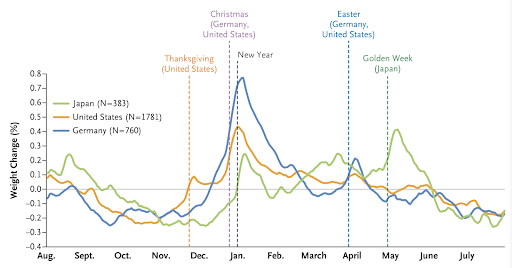
Figure 1: Weight change through the year [2].
In parallel, we see:
Short term rises in triglycerides and other lipids after periods of rich, high sugar, high fat eating
More heart attacks around Christmas than at other times of year, especially in older or higher risk adults [3].
Disrupted sleep, social jet lag, and large shifts in meal timing, all of which affect appetite regulation, metabolic control and the gut microbiome [4].
So the aim is not to turn the holidays into a “health retreat” or period of punishment.
The aim is to design the holidays so they still feel like holidays, but you arrive in January with:
Body weight roughly where it started
Muscle mass intact
Blood glucose and lipids not wildly worse
No guilt, no “detox” pressure, no punishment narrative
And ideally, with a slightly healthier relationship with food than the year before.
What actually happens to weight and metabolism over the holidays
1. Weight and lipids
One study used internet connected scales in the US, Germany, and Japan. Average weight gain over Christmas and New Year was under one kilo, but a large fraction of that gain remained six weeks later [2].
More recent reviews show similar patterns across different cultures. People overeat calorie dense foods, move less, sleep poorly, and have repeated days of positive energy balance. The weight gain is modest but tends to accumulate in those already carrying surplus weight or with cardiometabolic risk factors.
On top of that, cross sectional data show that triglycerides and other lipids are often higher straight after Christmas [5]. This is why you should avoid booking routine blood tests in the week immediately following heavy festive eating.
2. Acute cardiovascular risk
A large Swedish registry study of more than 280,000 heart attacks found a clear peak around Christmas Eve, particularly in older people and those with existing risk factors [3].
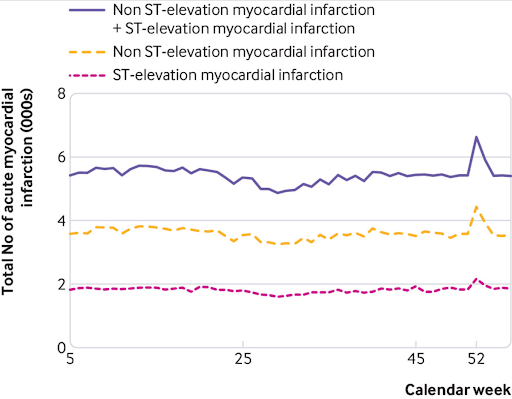
Figure 2: Heart attacks by calendar month [3].
You cannot prove causation from one observational study, but the pattern aligns with:
Heavy meals
Higher alcohol intake
Emotional stress
Cold weather and infections
For a healthy forty or fifty year old, this is mostly a signal rather than a reason to panic. It says: if you already have hypertension, diabetes, high apoB or Lp(a), the holiday is a period where it is sensible not to “see how far you can push it”.
3. Gut health, glucose, meal timing, and snacking
Some studies have highlighted how snack timing and quality relate to cardiometabolic markers. Higher quality snacks (more whole foods, fibre, protein) and earlier timing are associated with better cardiometabolic biomarkers, whereas late, ultra processed snacks correlate with worse lipids, insulin and glycaemic markers [6].
Social jet lag (large shifts between weekday and weekend sleep and eating patterns) has also been linked to changes in gut microbiome composition and cardiometabolic risk factors, likely due to the association with eating more high energy-dense foods and less fibre, fruit, and vegetables [4]. Short periods of high energy dense, low fibre eating shift the microbiome towards more pro inflammatory profiles. Longer periods may do more damage, especially when combined with alcohol and low movement.
The holidays are basically a social jet lag festival. Late nights, late breakfasts, grazing from tins of sweets. That combination gently nudges glucose, lipids, and appetite regulation in the wrong direction, especially if it runs from early December to early January.
4. Restraint style and disordered eating risk
How you think about food matters.
Restraint distinguishes between “rigid” and “flexible” patterns. Rigid restraint (good/bad foods, all or nothing rules) is associated with more binge eating and poorer long term weight control, while flexible restraint (guidelines, not rules) associates with better outcomes [7].
More recent research on intuitive eating also suggests that a focus on internal cues, body respect, and non judgemental eating is associated with better psychological outcomes and not worse weight control, even though the evidence base is still developing [8].
Principles for the holidays that protect health and your relationship with food
1. Treat the holidays as 3 percent of the year, not a challenge to your discipline
Even if you count eleven festive days across different traditions, that is about 3 percent of the year.
People who treat the holidays as “do or die” are more likely to binge, compensate with extreme exercise or restriction, and then feel shame. People who treat it as a slightly richer, more social period within an otherwise consistent year do better.
Some key reminders:
Stay broadly consistent the other 350 days.
Design the holiday window so it is enjoyable but not weeks of chaos.
Accept that a little weight fluctuation and some extra food is normal.
2. Never use exercise as punishment
There is no physiological logic in deciding that one mince pie must be “paid for” with a fixed number of burpees.
If you applied that logic consistently you would have to “pay for” your Greek yoghurt and your sweet potatoes as well. We only apply it to foods we have labelled as “bad”.
Psychologically, this approach:
Links movement to guilt, not energy, mood, and long term function
Increases compensation cycles (binge then punishing workouts)
Makes it harder to build sustainable routines
Instead:
Keep your normal training pattern as far as life allows
Add movement because it improves digestion, sleep, and headspace
Use post meal walking and “exercise snacks” as tools, not penance
The data on breaking up sitting and post meal movement support this approach.
A 2023 meta analysis of randomised crossover trials found that walking shortly after meals (within 0–30 minutes) significantly reduced postprandial glucose compared with sitting or pre meal walking, in both healthy and impaired glucose groups [9].
These are small, humane actions, not punishments.
3. Focus on what to add, not what to remove
Add enough supportive foods and behaviours, and they displace some of the less helpful ones without rigid rules.
Core adds:
Vegetables, whole grains, legumes, nuts, and seeds at each main meal
Fermented foods a few times per day where possible (yoghurt, kefir, sauerkraut, kimchi)
Oily fish or other omega 3 sources regularly
Water, tea, and coffee as default drinks, with alcohol as an optional extra, not a base layer
This also reduces the cognitive load of “detoxing”. You are not starving yourself on cucumber soup. You are reintroducing the foundations.
4. Keep restraint flexible, not rigid
Flexible restraint looks like:
“I try to fill half my plate with plants first”
“I mostly keep alcohol to with meals, not all day”
“I sit down to eat rather than mindlessly grazing”
Rigid restraint looks like:
“No sugar at all or I have failed”
“No carbs after 6 pm”
“I must burn off everything I eat”
The first pattern is associated with better long term weight control and less disordered eating. The second with more yo yo cycles.
The holidays are a good time to practice flexible restraint.
Evidence based tactics that do not ruin the holidays
1. Use post meal walking as a tool
Best evidence based pattern:
Start within 30 minutes of finishing the meal
Walk for 15–30 minutes at a brisk but conversational pace
If that is hard, three 5 minute walks in the first hour after eating are still useful
Practically:
Suggest “plate down, shoes on” as a family ritual
If weather is bad, do laps indoors or light stair walking
Treat it as part of the social event, not an extra task
2. Sprinkle the day with “exercise snacks” or VILPA
Short, frequent movement “snacks” break up long periods of sitting and improve glucose and insulin handling.
Lab studies show breaking up long sitting with 2–3 minute walking or simple resistance ‘snacks’ every 30 minutes can:
reduce postprandial glucose by roughly 20–40 percent
insulin exposure by a similar magnitude
in both people with type 2 diabetes and those with obesity, compared to uninterrupted sitting [10-12].
You do not need gym kit.
Examples:
30 seconds of bodyweight squats
15–20 chair stands before you refill your plate
One or two flights of stairs each time you get up for a drink
This doubles as a way to keep your brain awake in long family gatherings.
3. Use food pairing
Principles for holiday meals:
Start with salad, non starchy veg, or soup
Include a meaningful protein portion (turkey, fish, lentils, beans)
Pair higher glycaemic foods (potatoes, stuffing, desserts) with fibre, protein, or fat rather than eating them alone
A little acidity (pickles, vinegar, citrus) can further slow gastric emptying
You can still eat pudding. You just do not lead with it.
4. Guard sleep and social jet lag
Metabolic responses to food are worse when sleep is short, fragmented, or mistimed.
Holidays will rarely be a sleep retreat, but you can:
Keep wake time roughly consistent, even if bedtime slips
Avoid stacking several very late nights in a row
Treat one late night as something to buffer with better sleep and calmer food intake the following days
Holding on to muscle mass away from the gym
Short periods out of the gym are not a disaster.
Short breaks from lifting do not usually erase your progress. Meta analytic work suggests that in adults who have been doing resistance training, several weeks of detraining lead to modest reductions in strength and muscle size, and a substantial proportion of these gains returns quite quickly once training resumes [13,14].
Key points to remember:
Muscle is more sensitive to resistance training after a short break
A minimal effective dose can maintain most of your gains
Periodisation of training requires rest or lighter weeks, coordinate with the holidays
A simple travel routine (even better if you can sneak some blood flow restriction bands in your case - and you’re allowed):
Twice per week, do 2–3 sets per movement of:
Push pattern: press ups (full, incline, or on knees)
Pull pattern: band rows or suitcase rows with a suitcase or bag
Squat pattern: goblet squats with a bag or slow tempo bodyweight squats
Hinge pattern: Romanian deadlifts with a suitcase or single leg RDLs
Calf raises and simple core work
Aim for 5–10 challenging reps per set. You can complete this in 20–25 minutes.
If you do nothing else, do a slow, controlled lower body day at least once per week. That will blunt the fall in muscle and tendon loading and make the return to proper training smoother.
Putting it together
For those wanting to enjoy the holidays and, whilst not scuppering the progress towards health goals, the strongest evidence points towards:
Keeping the holiday window finite, not letting December turn into a free for all
Using post meal walking and movement snacks to buffer large meals
Prioritising plant rich plates, fermented foods, and whole grains while still making room for traditional dishes
Protecting sleep and avoiding extreme social jet lag
Holding a flexible, non punitive mindset around food and exercise
Doing a minimal resistance routine to maintain muscle
You do not need to count every gram or earn every bite.
You do need to treat your future self with enough respect to avoid turning three festive days into four weeks of habits you would never choose in March.
FAQ: Enjoy the holidays without carrying it on your waistline
Q: How much weight do people typically gain over Christmas and New Year?
Most adults gain less than 1 kg on average.
Q: Should I worry about blood lipids right after the holidays?
Expect short term worsening if eating shifts towards high sugar, high fat, and lower fibre.
Q: Should I avoid routine blood tests in the week after Christmas?
Yes, if the test aims to reflect your usual baseline.
Post holiday lipid changes can temporarily skew results, especially cholesterol measures.
Q: Do heart attacks really increase around Christmas?
A large Swedish registry analysis (n = 283,014 myocardial infarctions) found higher risk around Christmas.
It is observational, so it cannot prove causation, but it flags a real world vulnerability window for higher risk people.
Q: What is social jetlag, and why does it matter in December?
Social jetlag means a large mismatch between weekday and weekend sleep timing. Some researchers define it as a mid sleep shift of at least 1.5 hours, and linked it with differences in diet, cardiometabolic markers, and gut microbiome measures.
Q: Does snack timing really matter, or is it just total calories?
Timing correlates with different cardiometabolic markers in cohort data.
Late evening snacking (at or after 9 pm) associated with worse markers such as HbA1c and postprandial responses compared with earlier patterns.
Q: What is the single simplest tool after a big holiday meal?
Walk soon after eating.
A meta analysis found post meal exercise improves post meal glucose control more than sitting.
Q: What post meal walking dose has the best support?
Start within 30 minutes after finishing your meal.
Aim for 15 to 30 minutes at a brisk but conversational pace, or split into shorter walks in the first hour if that fits better.
Q: Do “exercise snacks” actually work, or is it wellness noise?
They work in lab and crossover trials, especially for postmeal blood sugar and insulin handling.
In type 2 diabetes, brief light walking or simple resistance breaks during prolonged sitting improved glycaemic control in randomised crossover studies.
Q: If I miss the gym for 2 to 3 weeks, will I lose my progress?
Not usually, especially if you already trained consistently.
Systematic reviews and meta analyses show detraining causes modest declines in strength and size, and people regain a substantial proportion after restarting.
Q: What is the minimum effective dose to maintain muscle over the holidays?
Two short sessions per week often covers the bases for maintenance.
Use 2 to 3 sets per movement pattern, target 5 to 10 challenging reps, and keep at least one controlled lower body session weekly if time gets tight.
Q: What should I aim for by early January, without turning the holidays into a project?
Keep body weight roughly where it started, keep muscle intact, and avoid a large sustained shift in sleep timing and meal timing. Use walking and brief movement breaks as “buffers”, not punishment, because the data supports them and the psychology tends to hold up better.
Further Reading
1. Díaz-Zavala, R. G. et al. Effect of the Holiday Season on Weight Gain: A Narrative Review. J. Obes. 2017, 2085136 (2017).
2. Helander, E. E., Wansink, B. & Chieh, A. Weight Gain over the Holidays in Three Countries. N. Engl. J. Med. 375, 1200–1202 (2016).
3. Mohammad, M. A. et al. Christmas, national holidays, sport events, and time factors as triggers of acute myocardial infarction: SWEDEHEART observational study 1998-2013. BMJ 363, k4811 (2018).
4. Bermingham, K. M. et al. Exploring the relationship between social jetlag with gut microbial composition, diet and cardiometabolic health, in the ZOE PREDICT 1 cohort. Eur. J. Nutr. 62, 3135–3147 (2023).
5. Vedel-Krogh, S., Kobylecki, C. J., Nordestgaard, B. G. & Langsted, A. The Christmas holidays are immediately followed by a period of hypercholesterolemia. Atherosclerosis 281, 121–127 (2019).
6. Bermingham, K. M. et al. Snack quality and snack timing are associated with cardiometabolic blood markers: the ZOE PREDICT study. Eur. J. Nutr. 63, 121–133 (2024).
7. Westenhoefer, J., Stunkard, A. J. & Pudel, V. Validation of the flexible and rigid control dimensions of dietary restraint. Int. J. Eat. Disord. 26, 53–64 (1999).
8. Eaton, M., Probst, Y., Foster, T., Messore, J. & Robinson, L. A systematic review of observational studies exploring the relationship between health and non-weight-centric eating behaviours. Appetite 199, 107361 (2024).
9. Engeroff, T., Groneberg, D. A. & Wilke, J. After Dinner Rest a While, After Supper Walk a Mile? A Systematic Review with Meta-analysis on the Acute Postprandial Glycemic Response to Exercise Before and After Meal Ingestion in Healthy Subjects and Patients with Impaired Glucose Tolerance. Sports Med. 53, 849–869 (2023).
10. Dempsey, P. C. et al. Benefits for Type 2 Diabetes of Interrupting Prolonged Sitting With Brief Bouts of Light Walking or Simple Resistance Activities. Diabetes Care 39, 964–972 (2016).
11. Wheeler, M. J. et al. Combined effects of continuous exercise and intermittent active interruptions to prolonged sitting on postprandial glucose, insulin, and triglycerides in adults with obesity: a randomized crossover trial. Int. J. Behav. Nutr. Phys. Act. 17, 152 (2020).
12. Yates, T. et al. Metabolic Effects of Breaking Prolonged Sitting With Standing or Light Walking in Older South Asians and White Europeans: A Randomized Acute Study. J. Gerontol. A. Biol. Sci. Med. Sci. 75, 139–146 (2020).
13. Grgic, J. Use It or Lose It? A Meta-Analysis on the Effects of Resistance Training Cessation (Detraining) on Muscle Size in Older Adults. Int. J. Environ. Res. Public. Health 19, 14048 (2022).
14. Encarnação, I. G. A. et al. Effects of Detraining on Muscle Strength and Hypertrophy Induced by Resistance Training: A Systematic Review. Muscles 1, 1–15 (2022).
